Dry moss, preserved moss, or living moss for wall art
Understanding the three main options for moss wall art
When you start looking into moss wall art, you quickly find that not all moss is the same. The material you choose affects how the piece looks, how long it lasts, and how much care it needs. Three broad categories come up: dry moss, preserved moss, and living moss. Each behaves differently once it is mounted on a frame or inside a display, and each suits a different set of priorities. Knowing the differences helps you pick the right starting point for your project.
Dry moss: natural texture, fragile finish
Dry moss is exactly what it sounds like: moss that has been harvested and left to air-dry with no treatment beyond that. It keeps the original shape and colour of the plant, but the colour fades over time to a muted brown or grey. The texture is brittle, so handling it too much causes bits to break off. Dry moss works well in arrangements where a natural, earthy look is the goal and where the piece will not be touched often. It is also the lightest option, which makes it easy to mount on a vertical surface without heavy hardware.
Because dry moss has no preservation treatment, it can attract dust and may shed small particles into the room. It is also more likely to absorb moisture from the air, which can lead to mould if the surrounding humidity is high. For a low-maintenance indoor display, dry moss is not the most practical choice unless you seal it in a glass frame. Even then, the colour will continue to shift over time.
Preserved moss: stable colour and minimal upkeep
Preserved moss is the most common material in modern moss wall art kits. The moss is harvested, then treated with a glycerin-based solution that replaces the water inside the plant cells. This keeps the moss soft and flexible while stopping it from decaying. The treatment also allows the moss to hold added colour, so preserved moss comes in a wider range of shades than you would find in nature. Reindeer moss, sheet moss, and cushion moss are all available in preserved form, and each offers a different surface texture.
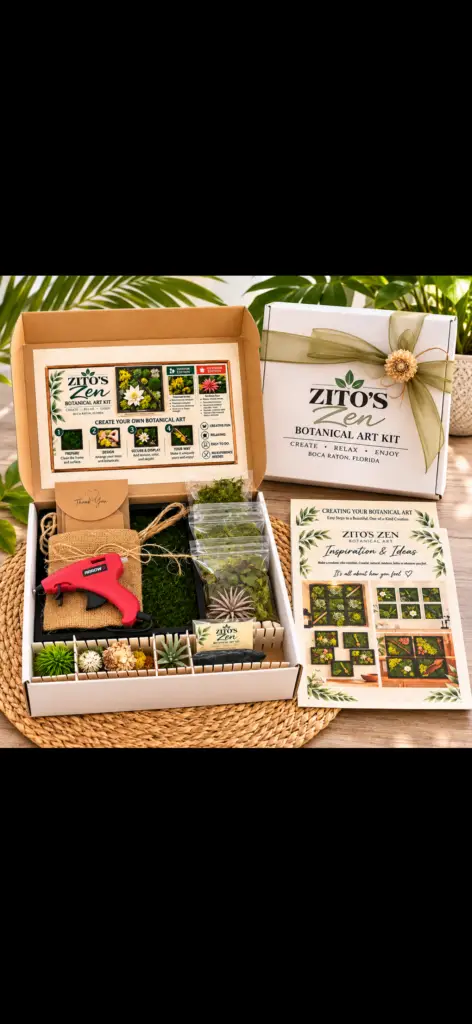
The main advantage of preserved moss is that it needs no light, water, or soil. Once it is mounted on a wood frame or inside a display panel, it stays looking the same for years if it is kept out of direct sunlight and away from very dry or very humid air. The glycerin can attract dust over time, but a gentle puff of compressed air or a soft brush removes it without damaging the moss. This makes preserved moss the easiest option for anyone who wants a green wall feature without the routine of plant care.
For anyone exploring moss art kits, preserved moss is the material most kits are built around. It offers the visual appeal of living greenery with none of the watering or lighting demands. The trade-off is that it is not a living organism, so it will not grow or change. If you enjoy watching a plant develop over time, preserved moss will feel static.
Living moss: active growth and natural variation
Living moss is a live plant that continues to grow, spread, and respond to its environment. It needs regular misting, indirect light, and good air circulation to stay healthy. In a closed terrarium or a glass-fronted frame, living moss can thrive for a long time because the container holds humidity. On an open wall panel, it is harder to keep alive unless the room has consistently high humidity and low light.
The appeal of living moss is its organic behaviour. It shifts colour slightly with the seasons, sends out new shoots, and fills gaps in ways that no artificial arrangement can match. Over time, the piece becomes unique to the conditions in your home. The downside is that it requires ongoing attention. If the moss dries out too much, it turns brown and may not recover. If it stays too wet, mould or algae can take over. Living moss is best suited to people who enjoy tending plants and who have a suitable spot in their home already.
Another factor is that living moss introduces small insects and spores into your home. Most are harmless, but some people prefer to avoid that uncertainty. For a sealed display, this is less of a concern, but open frames allow the moss to interact with the room air.
Which one fits your project?
The choice between dry, preserved, and living moss comes down to how much involvement you want and what look you are after. If you want a piece that stays exactly the same with no effort, preserved moss is the clear winner. It is the material most often used in moss art kits because it combines stability with a wide palette of colours and textures. The phrase prepared moss for home displays describes preserved moss well, since the preparation is what gives it that long shelf life and consistent appearance.
If you prefer a natural, weathered look and do not mind the material changing over time, dry moss offers a texture that preserved moss cannot fully replicate. It is also the most budget-friendly option if you are sourcing your own moss, though the trade-off is durability.
If you enjoy plant care and want a living, evolving piece, living moss gives you that dynamic quality. It demands more from you, but the reward is a display that feels alive. For most indoor settings, living moss works best in a closed container where humidity stays high and the moss is protected from draughts.
Practical considerations for moss wall art
Surface texture matters more than you might think. Sheet moss creates a flat, carpet-like surface, while cushion moss adds volume and depth. Reindeer moss, which is actually a lichen, has a branching structure that gives a soft, airy look. Mixing types within a single frame can create visual interest, but each type behaves slightly differently when preserved. Stick to preserved versions of each if you want them to age at the same rate.
The wood frame or backing board also plays a role. Preserved and dry moss are lightweight enough to mount on thin plywood or MDF. Living moss, especially when kept moist, adds weight, so the frame needs to be sturdier and the fixings must hold securely on the wall. Waterproof backing is essential for living moss to stop moisture damaging the wall behind it.
Colour variation is another point. Preserved moss offers consistent, vibrant colours because the dye is added during processing. Dry moss gives you the muted tones of the original plant. Living moss has subtle colour shifts that depend on light and moisture. None is better than the others; it is about matching the look to the room and the mood you want.
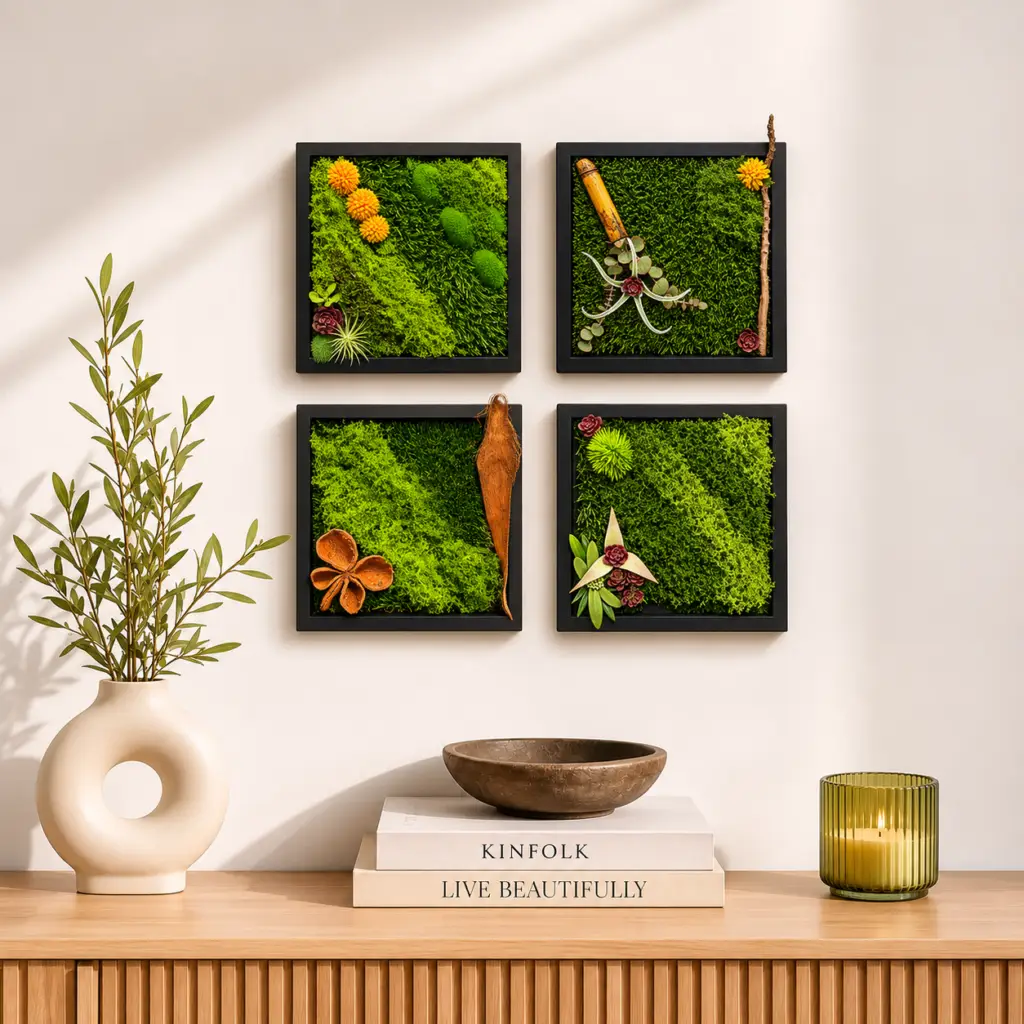
For anyone new to moss wall art, starting with a small preserved panel is a good way to learn how the material handles before committing to a larger piece. The same prepared moss for home displays that works in a small frame also scales up to a full wall panel, so you can test the look in one corner and expand later.
Making your choice
There is no single right answer. Dry moss gives you an honest, unaltered material that shows its age. Preserved moss offers convenience and colour range. Living moss provides an interactive, growing piece. The best match depends on your willingness to maintain the display and the kind of visual effect you want in your space. If you are assembling a moss art kit, preserved moss is the most forgiving material to work with and the one that delivers the most predictable result over time.